

If you run a small or medium-sized business in Kenya, there’s a tax update you shouldn’t ignore.
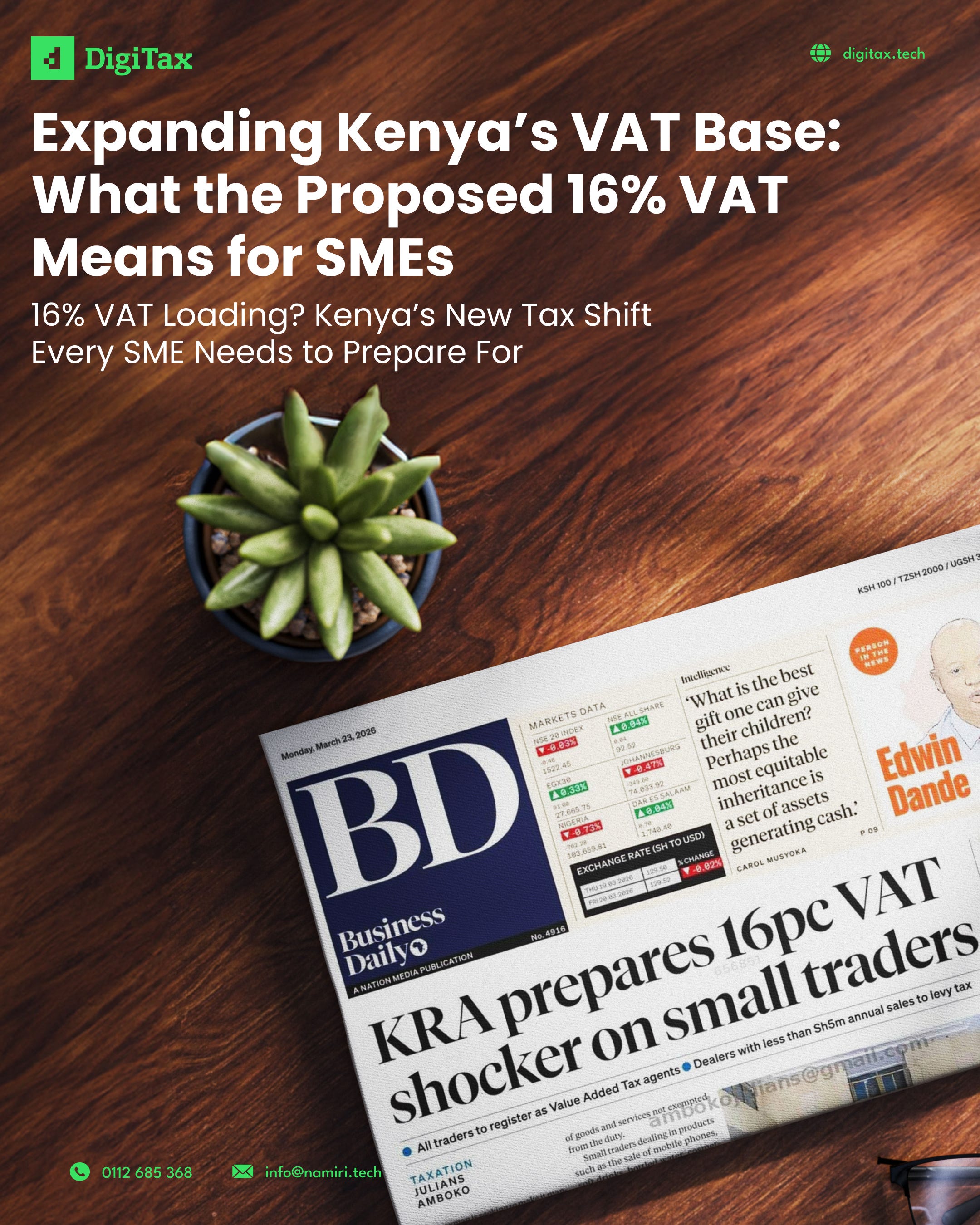
Recent proposal by the Kenya Revenue Authority (KRA) to cut the threshold for VAT registeration from the current KES 5 ,000, 000 to Zero(0) in the Finance Bill 2026 could significantly affect how SMEs including shops, wines and spirits outlets, mobile phones retailers, soft drinks and bottled water retailers, cosmetics, snacks, cooking gas and petroleum products retailers operate.
The goal? Not to increase VAT rates but to bring more businesses into the VAT system.
So, what’s changing?
In simple terms, all small businesses may soon be required to:
Register for VAT
Charge 16% VAT on their products or services
Issue eTIMS-compliant invoices
File VAT returns regularly
This means that even if your business wasn’t dealing with VAT before, that could soon change.
Why is this happening?
The government wants to improve tax collection by expanding the VAT base instead of increasing tax rates. This a global approach used in many countries to make tax systems more efficient and fair.
But while this makes sense on paper… the reality for SMEs is different.
What this means for your business
More compliance responsibilities
You’ll need proper systems for invoicing, record-keeping, and tax filing. Manual processes or disorganized records will quickly become a problem.
Pressure on your cash flow
Here’s the tricky part: you may be required to remit VAT before your customers pay you. That can strain your finances especially if you’re already operating on tight margins.
Pricing decisions become more complex
Do you absorb the VAT cost or pass it on to customers? This is a decision you will need to make and either way, it affects your competitiveness.
A more level playing field
The upside? Businesses that were previously undercutting prices by avoiding VAT will now be required to comply too. That means fairer competition.
The real challenge: How can you stay compliant without slowing down your business?
Most SMEs don’t have the internal capacity to manage:
eTIMS invoicing
Monthly VAT filings
Accurate record-keeping
Tax reconciliations
And with KRA systems becoming more automated, even small errors can lead to penalties or cash flow issues. This is more reason why you need the right system that helps you stay complaint…
DigiTax is built to make tax compliance simple, especially for SMEs navigating these new changes. With DigiTax, you can:
Generate eTIMS-compliant invoices.
Automate your VAT calculations and filings
Keep clean, organized digital records
Reduce errors and avoid costly penalties
Get better visibility into your cash flow and tax obligations
Instead of struggling to keep up with compliance, you can focus on growing your business.
What should you do now?
Start preparing for VAT registration if you’re not already registered.
Review your pricing and cash flow strategy.
Move away from manual systems.
Adopt tools that make compliance easier early and not last minute.
These changes are coming and while they may feel overwhelming, they also present an opportunity to build a more structured, scalable business. The SMEs that adapt early will not just stay compliant they’ll operate smarter.
And with DigiTax, you don’t have to figure it out alone.
Speak to one of our experts by contacting us through: Email info@namiri.tech or call/Whatsapp 0112685368