

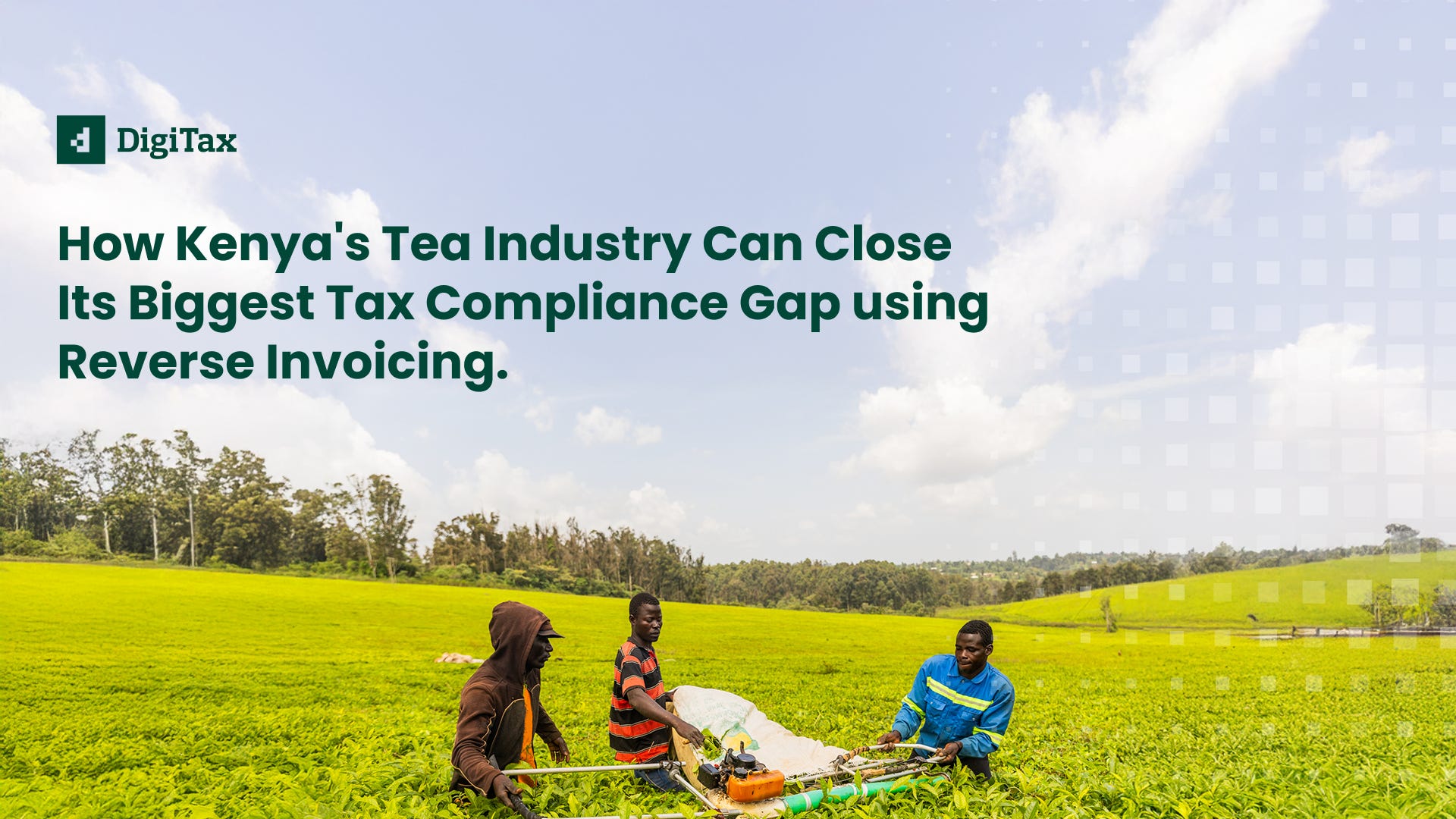
Kenya’s tea industry generates over Ksh 215 billion in production value annually and is one of the country’s most significant export earners. But behind those numbers lies a structural tension that sits squarely on the desk of every CFO and Head of Finance in the sector: the businesses that buy tea — factories, estates, cooperatives — are dealing with hundreds of thousands of suppliers who are structurally unable to issue eTIMS-compliant tax invoices.
Under Kenya’s eTIMS framework, a business can only claim a tax deduction for an expense if it is supported by a compliant electronic tax invoice. Green leaf purchases are typically the single largest cost for any tea factory. If those purchases are not documented compliantly, they are at risk of being disallowed — inflating taxable income and increasing the tax burden, not because the cost was not real, but because the paperwork was not right.
This is not a minor administrative issue. It is a material financial risk. And the Finance Bill 2026 is about to make it significantly more expensive to ignore.
The compliance gap in Kenya’s tea sector is not a farmer problem — it is a finance team problem. The liability sits with the buyer, not the supplier.
Understanding the Compliance Gap Across the Value Chain
Every stage of Kenya's tea value chain involves taxable transactions that require eTIMS documentation. The compliance challenge, however, is not evenly distributed. It is most acute at the base of the chain — where high-volume, informal transactions meet digital and literacy constraints.
Smallholder Farmers: supply green leaf; rarely eTIMS-capable
Collection Centres & Farmer Organisations: Aggregate leaf; variable compliance capability
Tea Factories: Process leaf; bear the compliance burden
Brokers: Market tea at Mombasa auction
Exporters & Traders: Purchase at auction for export
Packers & Blenders: Value-add for domestic & export markets
The critical gap is between smallholder farmers and the factories that buy from them. It is here that the volume is highest, the suppliers are least equipped, and the financial exposure to the buying business is greatest.
What is Reverse Invoicing?
Reverse Invoicing explained
Reverse invoicing is a mechanism introduced under the Tax Laws (Amendment) Act, 2024 that allows the buyer in a transaction to generate the eTIMS-compliant tax invoice on behalf of the seller. Instead of the farmer — or transporter, or collection agent — issuing an invoice to the factory, the factory issues the invoice for them through the eTIMS system.
Reverse invoicing does not lower the bar on what must be documented. It relocates who does the documenting. This is the distinction that makes it workable for the tea sector. For a finance team managing a factory that buys from 3,000 farmers, reverse invoicing transforms a structurally impossible compliance task into an automated, integrated process.
It is also not limited to green leaf purchases. Any payment to a supplier who cannot generate their own eTIMS invoice — transporters, casual maintenance contractors, small-scale collection agents — can be captured through reverse invoicing, ensuring the full expense base of the business is compliantly documented.
How to Implement Reverse Invoicing
Whether you operate a single factory, a private estate, a cooperative, or a multi-factory network like KTDA, the implementation framework for reverse invoicing follows the same core steps. The scale and complexity will differ, but the compliance requirements are consistent across the sector.
Engage a KRA-approved eTIMS integrator
Partner with an approved third-party integrator to connect your payment systems to the eTIMS platform. This enables automated reverse invoice generation at the point of payment — embedding compliance into existing workflows rather than creating a parallel manual process.
Collect supplier consent systematically
Reverse invoicing requires the supplier’s consent. Build this into existing farmer registration, pay-out, or annual general meeting processes using simple, multilingual consent forms. For factories buying from outgrowers, field officers are the most efficient channel. All consent records must be retained for audit purposes.
Automate invoice generation at point of payment
Each time a green leaf payment is processed, the system automatically triggers a reverse invoice through the eTIMS integrator — capturing the supplier’s KRA PIN, quantity, value, and tax classification. No manual invoice creation required. The compliance event happens at the same moment as the payment.
Extend to all non-compliant supplier categories
Apply the same mechanism to payments made to leaf transporters, collection agents, casual maintenance contractors, and other small-scale service providers who cannot generate their own eTIMS invoices. These costs are deductible — but only if documented.
Educate suppliers on their own compliance obligations
Reverse invoicing resolves your documentation problem. But suppliers — particularly farmers — also need to document their own input costs to correctly compute their tax position. Run basic eTIMS literacy training through field officers, farmer societies, or cooperative channels alongside the rollout.
Reconcile, monitor, and audit-proof your records
Reconcile all reverse invoices with payment records monthly. Maintain a supplier consent register and a log of all invoices issued. These records are your primary defence in a KRA audit and your evidence base for any deduction claimed.
What This Looks Like at Scale: KTDA
To understand how this framework plays out in practice, consider the KTDA model. As the largest smallholder tea organisation in Kenya, KTDA illustrates both the scale of the compliance challenge and the potential of reverse invoicing to address it. The same principles apply to any factory, estate, or cooperative — KTDA simply makes the stakes most visible.
Kenya Tea Development Agency (KTDA) is a farmer-owned agency managing 66 factories serving 700,000+ smallholder shareholders.
Each KTDA factory buys from thousands of surrounding farmers on a near-daily basis. Without reverse invoicing, every one of those farmers would need to individually issue an eTIMS invoice — operationally impossible given the digital realities of Kenya’s tea-growing regions. The same problem faces every private factory buying from outgrowers and every cooperative receiving leaf from member farmers.
KTDA Holdings partners with an approved eTIMS integrator
A centralised integration means all 66 factories benefit from the same automated reverse invoicing capability, rather than each factory solving the problem independently.
Farmer consent is collected through existing AGM and field officer processes
KTDA already has direct farmer relationships through its annual general meetings and field officer network — the natural channel for obtaining and recording consent at scale.
Green leaf payments trigger automatic reverse invoices
Each payment cycle — whether daily, weekly, or at the end of a flush — automatically generates a compliant reverse invoice for every farmer, eliminating the need for any manual documentation process.
Farmer training on input cost documentation runs in parallel
KTDA’s field officers, already deployed across all tea-growing zones, are well placed to deliver the basic eTIMS education farmers need to document their own farm input costs alongside the reverse invoicing rollout.
A private estate buying from 500 outgrowers applies the same steps — just at a different scale. A cooperative with 10,000 member farmers follows the same logic. The framework is sector-wide; KTDA simply illustrates what it looks like when fully deployed.
Farmer Education: Completing the Compliance Picture
Reverse invoicing resolves the factory’s documentation challenge. But a farmer who consents to reverse invoicing for their green leaf income has addressed only one side of their tax position. Finance teams and field officers across the sector should ensure farmers understand that they can — and should — document their own deductible expenses.
Farm inputs - Fertilisers, pesticides, and agro-chemicals from registered dealers — deductible with eTIMS-compliant receipts.
Transport costs - Cost of getting green leaf to collection centres or factories — deductible with payment records retained.
Farm maintenance - Pruning, skiffing, and maintenance services — deductible if the contractor issues or consents to a reverse invoice.
The message to farmers is simple: consent to reverse invoicing for your green leaf income, and keep your receipts for your farm expenses. Without both, the tax computation is incomplete and the farmer ends up overpaying.
What changes under the Finance Bill 2026
Automatic tax assessments where eTIMS documentation is absent — removing the current flexibility for late or manual documentation after the fact.
Stricter penalties for failure to issue or retain eTIMS-compliant invoices, applying across all participants in the value chain — not just large taxpayers.
Disallowance of deductions for purchases not supported by eTIMS documentation, with a direct and immediate impact on taxable income for any buying business.
Tighter timelines for invoice issuance, reducing the window for correcting documentation errors after the point of supply.
The time to implement reverse invoicing is before these provisions take effect — not after an automatic assessment has been raised and a penalty has been levied on transactions that were always legitimate but simply undocumented.
What should CFOs in the Tea Sector do next?
The compliance gap in Kenya’s tea sector is real, it is quantifiable, and it sits directly on the balance sheet of every factory, estate, and cooperative that buys from smallholder farmers. Green leaf purchases — your largest cost — are only deductible if they are documented. Reverse invoicing is the mechanism that makes that documentation possible at scale.
The framework is clear: engage an approved eTIMS integrator, systematically obtain supplier consent, automate invoice generation at the point of payment, extend the same model to transporters and agents, and run farmer education in parallel. Whether you manage a single factory or a network like KTDA, the steps are the same. The Finance Bill 2026 makes the urgency undeniable.
For businesses that act now, reverse invoicing is a compliance solution. For those that wait, it becomes a missed opportunity — at a time when the cost of non-compliance is rising sharply.
Ready to Implement Reverse Invoicing at Scale?
DigiTax is an OSCU approved eTIMS integrator and can help you implement Reverse Invoicing at Scale.