

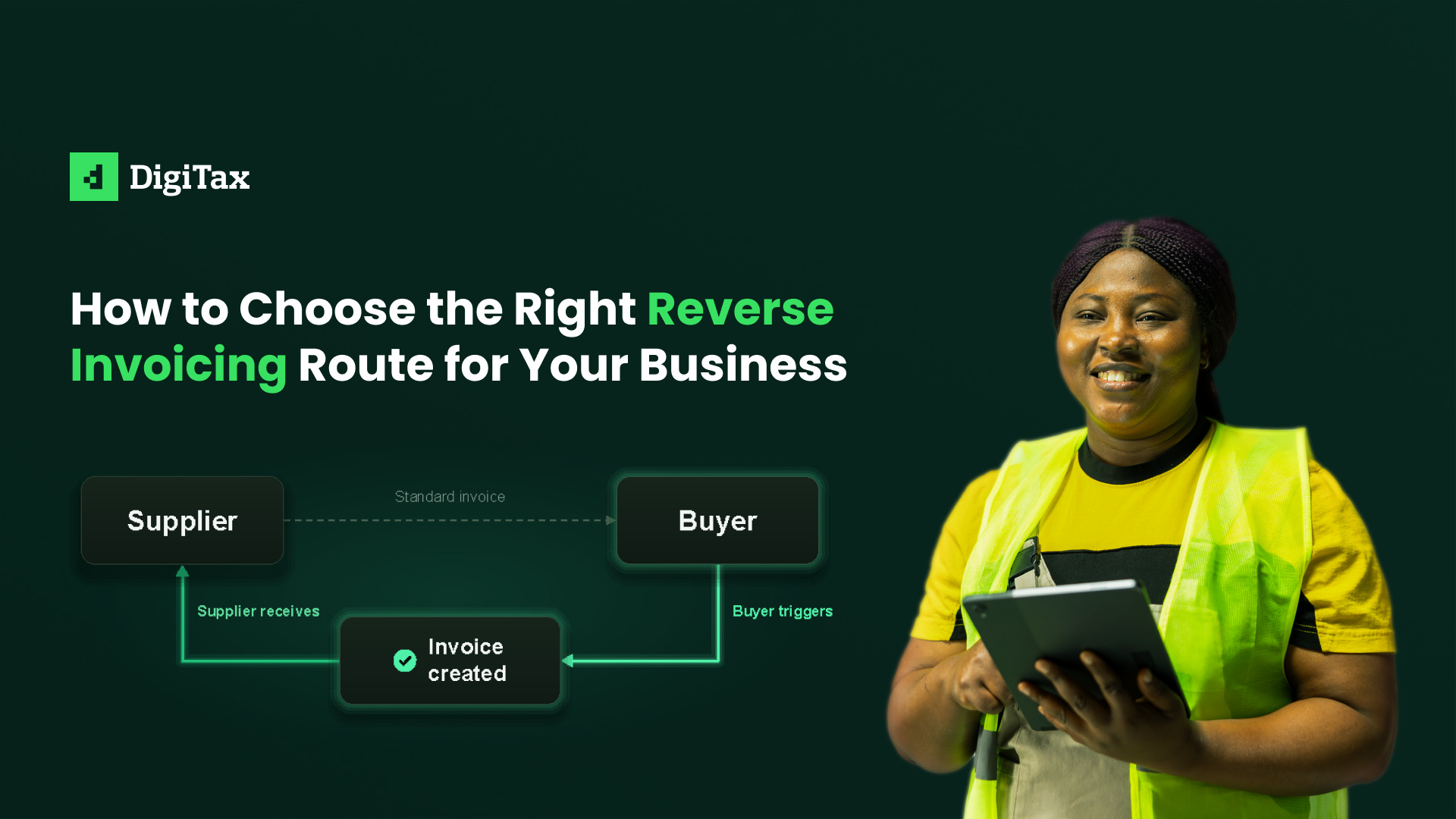
Under KRA’s eTIMS requirements, every business transaction needs an electronic tax invoice. But what happens when your supplier can’t issue one? A smallholder tea farmer, a cooperative of coffee pickers, or a small-scale trader may not be positioned to generate compliant invoices themselves. This is where Reverse Invoicing comes in: it allows the buyer to generate the tax invoice on the seller’s behalf.
The question most finance and procurement teams eventually face isn’t whether to use reverse invoicing: KRA has made that requirement clear for these supplier categories. It’s how: through KRA’s own eCitizen portal, or through an integrated solution like DigiTax. The right answer depends almost entirely on the size and shape of your supplier network.
Two Routes, Two Very Different Workloads
eCitizen is KRA’s default access point for this functionality. Buyers can log into their KRA profile, select the relevant module (or dial *222# for the USSD version), enter the supplier’s PIN, and generate the invoice manually one transaction at a time.
DigiTax takes a different approach. Rather than manual entry per transaction, it integrates directly with your existing accounting or ERP system through a system-to-system connection, generating reverse invoices automatically from data you’re already recording.
Both routes are working toward the same compliance outcome. What differs is what happens when the number of suppliers and the number of monthly transactions starts to climb.
When eCitizen Makes Sense
If your business deals with a small, direct list of suppliers who occasionally need an invoice generated on their behalf, eCitizen’s manual process is a reasonable fit. It’s free, it’s KRA’s own platform, and for low transaction volumes the extra data entry is a minor inconvenience rather than an operational bottleneck.
This tends to describe the buyer-initiated invoicing (BII) use case: a defined, direct relationship with a manageable number of small-turnover suppliers.
Where the Manual Process Breaks Down
The calculation changes for buyers operating in sectors with diffuse, high-count supplier networks — tea, coffee, sugar, dairy, floriculture, and similar sectors where a single buyer may be sourcing from well over a hundred smallholder suppliers in a given month.
At that scale, manual entry through eCitizen means:
Re-keying every transaction by hand, separate from your accounting records
A higher likelihood of mismatched PINs, amounts, or missed transactions
No automatic reconciliation between what’s in your books and what’s been submitted to KRA
Significant staff time spent on repetitive data capture rather than exception-handling or supplier relationships
This is the operational gap a system-to-system solution like DigiTax is built to close: automating the invoice generation itself, rather than automating around a manual process.
Compliance Considerations That Apply Either Way
A few things worth knowing regardless of which route you choose:
Reverse invoicing is not enabled by default and is closely regulated by KRA, given its potential for misuse. Going live involves a formal process a commercial and technical review, a meeting with KRA, sandbox testing, and KRA’s user acceptance testing before approval.
You cannot reverse-invoice a VAT-registered supplier. Before proceeding, confirm the supplier’s tax obligation status if they’re VAT registered, they need to issue their own invoice.
Supplier consent matters. Whichever platform you use, KRA expects proof of the process you use to obtain consent from suppliers before invoicing on their behalf.
A Simple Way to Decide
Ask yourself two questions:
How many suppliers are you reverse-invoicing, and how often? A handful of suppliers a month points toward eCitizen. A hundred-plus scattered across an agricultural supply chain points toward automation.
How much staff time is currently going into manual reconciliation? If your team is spending hours matching invoices to your ledger by hand, that’s a sign the manual route is costing you more than the automation would.
There’s no universally “right” platform here: only the right fit for the shape of your supplier base. For low-volume, direct relationships, eCitizen does the job. For high-volume, diffuse networks, an integrated solution changes reverse invoicing from a recurring administrative burden into something your systems handle in the background.
Have questions about whether your business qualifies for reverse invoicing, or what the KRA approval process looks like? Get in touch with the DigiTax team here